Conversível (automóvel): diferenças entre revisões
(Criou a página com "{{outros usos}} {{Redirect|Cabriolet|the horse carriage|cabriolet (carriage)}} {{Use dmy dates|date=April 2014}} File:Cadillac Eldorado 2.JPG|thumb|right|250px|[[Cadillac...") |
Sem resumo de edição |
||
| (Há 3 edições intermédias do mesmo utilizador que não estão a ser apresentadas) | |||
| Linha 1: | Linha 1: | ||
{{Redirect|Cabriolet|carruagem de cavalos|cabriolet (carruagem)}} | |||
{{Redirect|Cabriolet| | |||
{{Use dmy dates|date=April 2014}} | {{Use dmy dates|date=April 2014}} | ||
[[ | [[Ficheiro:Cadillac Eldorado 2.JPG|thumb|right|250px|[[Cadillac Eldorado]] c.1959, with zipper openable clear plastic rear window]] | ||
[[ | [[Ficheiro:Porsche 911 Turbo Cabriolet (7266829930).jpg|thumb|right|250px|[[Porsche 997|Porsche 911 Turbo convertible (Type 997)]] with retractable windows and retracted softtop]] | ||
O '''conversível''' é um [[automobile body style|classe de automóvel]], que pode 'Converter ' entre um modo de céu aberto e um fechado, variando em grau e meio por modelo. Conversíveis evoluídos a partir da anterior [[Phaeton (automóvel)|phaeton]], um veículo aberto sem janelas laterais de vidro que possam ter tido painéis removíveis de tela ou outro material para proteção contra os elementos. | |||
Historicamente, um teto retrátil era consistituido de um frame articulado, coberto com um ''dobradura de tecido têxtil de base'' similar a uma [[phaeton (carruagem)|carruagem aberta]] que evoluiu para a forma mais comum. Um menor visto ''hardtop destacável'' forneceu uma alternativa mais resistente e segura. Como a tecnologia melhorada um '''[[hardtop retrátil]]''' which removes and stows its own rigid roof in its trunk appeared, increasingly becoming the most popular form. | |||
A '''[[cabrio coach|semi-convertible]]''' also known as a ''cabrio coach'' has a retractable or removable top which retains fully framed windows on its doors and side glass. | A '''[[cabrio coach|semi-convertible]]''' also known as a ''cabrio coach'' has a retractable or removable top which retains fully framed windows on its doors and side glass. O '''[[Landaulet (automóvel)|landaulet]]''' is a semi-enclosed convertible with a fully enclosed front cabin and an open rear, typically with a folding fabric top and roll-down glass all round. | ||
Most convertibles are [[Roadster (automobile)|roadster]]s, with two or four-door [[touring car]] forms next, the latter being a rarity. | Most convertibles are [[Roadster (automobile)|roadster]]s, with two or four-door [[touring car]] forms next, the latter being a rarity. | ||
== | ==Outros termos== | ||
In {{Lang-en-GB|'''drophead coupé'''}} is used instead of "convertible". Other common terms include '''cabriolet''', '''cabrio''', '''soft top''', '''drop top''', '''rag top''', '''spider''', and '''spyder'''. Historically, a spider was an open two-seat car with no provision for a top, as with the [[Porsche 550]] Spyder, and thus not a convertible. In time the term has been adopted to describe removable and retractable hardtops. | In {{Lang-en-GB|'''drophead coupé'''}} is used instead of "convertible". Other common terms include '''cabriolet''', '''cabrio''', '''soft top''', '''drop top''', '''rag top''', '''spider''', and '''spyder'''. Historically, a spider was an open two-seat car with no provision for a top, as with the [[Porsche 550]] Spyder, and thus not a convertible. In time the term has been adopted to describe removable and retractable hardtops. | ||
| Linha 20: | Linha 19: | ||
[[File:1967 Ambassador DPL conv top-down-winter-FL palm.jpg|thumb|right|250px|1967 [[AMC Ambassador]] convertible with its fabric top folded]] | [[File:1967 Ambassador DPL conv top-down-winter-FL palm.jpg|thumb|right|250px|1967 [[AMC Ambassador]] convertible with its fabric top folded]] | ||
=== | ===Prós e contras=== | ||
==== | ====Prós==== | ||
Among the advantages of convertible tops are: | Among the advantages of convertible tops are: | ||
* All-round visibility | * All-round visibility | ||
| Linha 29: | Linha 28: | ||
* Enhanced driving pleasure | * Enhanced driving pleasure | ||
==== | ==== Contras ==== | ||
Disadvantages of fabric top convertibles include: | Disadvantages of fabric top convertibles include: | ||
* Potentially reduced safety. | * Potentially reduced safety. | ||
| Linha 50: | Linha 49: | ||
Folding textile convertible tops often fail to completely hide their internal mechanism or can expose their vulnerable underside to sun exposure and fading. A [[tonneau cover]] provide a solution. | Folding textile convertible tops often fail to completely hide their internal mechanism or can expose their vulnerable underside to sun exposure and fading. A [[tonneau cover]] provide a solution. | ||
=== | === Janelas === | ||
Side windows non-existent in open cars which may have detachable side screens, are manually or power operated glass side windows as in a saloon or sedan. Rear-windows have evolved similarly, with plastic rear-windows appearing as late as the first generation [[Porsche Boxster]]. Contemporary convertibles and retractable hardtops feature [[Heatable Glass|heatable glass]] rear windows to maximize visibility – though rear windows often can compromise visibility by their size, as with the case of the very small rear window and restricted visibility of the [[Mitsubishi Eclipse]] Spyder. Plastic windows can degrade, fade, yellow and crack over time, diminishing visibility. | Side windows non-existent in open cars which may have detachable side screens, are manually or power operated glass side windows as in a saloon or sedan. Rear-windows have evolved similarly, with plastic rear-windows appearing as late as the first generation [[Porsche Boxster]]. Contemporary convertibles and retractable hardtops feature [[Heatable Glass|heatable glass]] rear windows to maximize visibility – though rear windows often can compromise visibility by their size, as with the case of the very small rear window and restricted visibility of the [[Mitsubishi Eclipse]] Spyder. Plastic windows can degrade, fade, yellow and crack over time, diminishing visibility. | ||
=== | === Bloqueador de vento === | ||
A windblocker or wind deflector minimizes noise and rushing air reaching the occupants. Mazda pioneered a version on the [[Mazda RX7|RX7]] convertible which featured an integral rigid opaque panel that folded up from behind the front seats. Current convertibles feature windblockers of various designs including detachable fold-up designs (<small>e.g., </small>[[Toyota Camry Solara|Toyota Solara]]), vertically retractable glass (<small>e.g., </small>[[Audi TT]]), minimal flaps (<small>e.g., </small>[[Mazda Miata]]) – or other integrated wind controlling systems. | A windblocker or wind deflector minimizes noise and rushing air reaching the occupants. Mazda pioneered a version on the [[Mazda RX7|RX7]] convertible which featured an integral rigid opaque panel that folded up from behind the front seats. Current convertibles feature windblockers of various designs including detachable fold-up designs (<small>e.g., </small>[[Toyota Camry Solara|Toyota Solara]]), vertically retractable glass (<small>e.g., </small>[[Audi TT]]), minimal flaps (<small>e.g., </small>[[Mazda Miata]]) – or other integrated wind controlling systems. | ||
| Linha 60: | Linha 59: | ||
Mercedes and Audi currently offer a heating duct to the neck area of the seat on [[Mercedes-Benz SLK-Class|SLK]], [[Mercedes-Benz SL-Class|SL]], and [[Audi A5|A5]]/[[Audi S5|S5]] models marketed as an "Air Scarf". | Mercedes and Audi currently offer a heating duct to the neck area of the seat on [[Mercedes-Benz SLK-Class|SLK]], [[Mercedes-Benz SL-Class|SL]], and [[Audi A5|A5]]/[[Audi S5|S5]] models marketed as an "Air Scarf". | ||
=== | === Segurança === | ||
<!-- Linked to from [[Roll bar]] --> | <!-- Linked to from [[Roll bar]] --> | ||
Contemporary convertible design may include such features as electrically heated glass rear window (for improved visibility), seat belt [[seat belt#Pretensioners and webclamps|pre-tensioners]], boron steel reinforced A-pillars, front and side airbags, safety cage construction – a horseshoe like structure around the passenger compartment – and [[Roll over protection structure|roll over protection structures or (ROPS)]] with [[pyrotechnics|pyrotechnically charged]] [[roll hoop]]s hidden behind the rear seats that deploy under roll-over conditions whether the roof is retracted or not. | Contemporary convertible design may include such features as electrically heated glass rear window (for improved visibility), seat belt [[seat belt#Pretensioners and webclamps|pre-tensioners]], boron steel reinforced A-pillars, front and side airbags, safety cage construction – a horseshoe like structure around the passenger compartment – and [[Roll over protection structure|roll over protection structures or (ROPS)]] with [[pyrotechnics|pyrotechnically charged]] [[roll hoop]]s hidden behind the rear seats that deploy under roll-over conditions whether the roof is retracted or not. | ||
| Linha 66: | Linha 65: | ||
The [[Volvo C70]] retractable hardtop includes a door-mounted side impact protection inflatable curtain which inflates ''upward'' from the interior belt-line – vs. downward like the typical curtain airbag.<ref name="mweek">{{cite web | title = Road Test: 2006 Volvo C70 Convertible | publisher = Motorweek Program #2533 | url = http://www.mpt.org/motorweek/reviews/rt2533a.shtml |accessdate=6 March 2011}}{{dead link|date=February 2014}}</ref> The curtain has an extra stiff construction with double rows of slats that are slightly offset from each other. This allows them to remain upright and offer effective head protection even an open window. The curtain also deflates slowly to provide protection should the car roll over. | The [[Volvo C70]] retractable hardtop includes a door-mounted side impact protection inflatable curtain which inflates ''upward'' from the interior belt-line – vs. downward like the typical curtain airbag.<ref name="mweek">{{cite web | title = Road Test: 2006 Volvo C70 Convertible | publisher = Motorweek Program #2533 | url = http://www.mpt.org/motorweek/reviews/rt2533a.shtml |accessdate=6 March 2011}}{{dead link|date=February 2014}}</ref> The curtain has an extra stiff construction with double rows of slats that are slightly offset from each other. This allows them to remain upright and offer effective head protection even an open window. The curtain also deflates slowly to provide protection should the car roll over. | ||
=== | === Variantes === | ||
Convertibles have offered numerous iterations that fall between the first mechanically simple but attention-demanding fabric tops to highly complex modern retractable hardtops: | Convertibles have offered numerous iterations that fall between the first mechanically simple but attention-demanding fabric tops to highly complex modern retractable hardtops: | ||
| Linha 90: | Linha 89: | ||
A type of convertible with only two doors,<ref>{{cite web| url=http://dictionary.reverso.net/english-definition/cabriolet |title=''Cabriolet'' definition |publisher=Reverso Online Dictionary |accessdate=6 March 2011 }}</ref> and thereby recalling the [[Cabriolet (carriage)|cabriolet carriage]]. With its [[Mazda RX7]] convertible, Mazda introduced a two-seater convertible with a removable rigid section over the passengers, removable independently of power operated textile section behind with heatable glass rear window. During the 1980s, [[Jaguar cars|Jaguar]] produced an XJ-SC with two removable panels over the front seats and a partial fold-down convertible section in the back. It retained the rear side windows of the coupe and had fixed cant rails above these and the door glass. This allowed an almost full convertible with roll-over safety. Going back in Jaguar history, during the 1950s the XK 120 Drophead Coupe (DHC) and later variants, provided open-air motoring with quite civilized fully lined insulated tops with the weather-protection of the hardtop models. | A type of convertible with only two doors,<ref>{{cite web| url=http://dictionary.reverso.net/english-definition/cabriolet |title=''Cabriolet'' definition |publisher=Reverso Online Dictionary |accessdate=6 March 2011 }}</ref> and thereby recalling the [[Cabriolet (carriage)|cabriolet carriage]]. With its [[Mazda RX7]] convertible, Mazda introduced a two-seater convertible with a removable rigid section over the passengers, removable independently of power operated textile section behind with heatable glass rear window. During the 1980s, [[Jaguar cars|Jaguar]] produced an XJ-SC with two removable panels over the front seats and a partial fold-down convertible section in the back. It retained the rear side windows of the coupe and had fixed cant rails above these and the door glass. This allowed an almost full convertible with roll-over safety. Going back in Jaguar history, during the 1950s the XK 120 Drophead Coupe (DHC) and later variants, provided open-air motoring with quite civilized fully lined insulated tops with the weather-protection of the hardtop models. | ||
=== | === História === | ||
Until the 1910 introduction by [[Cadillac (automobile)|Cadillac]] of the United States' first closed-body car, the open or convertible car was the primary body style. U.S. automakers manufactured a broad range of models during the 1950s and 1960s – from economical compact-sized models such as the [[Rambler American]]<ref>{{cite journal|url= http://books.google.com/books?id=AFIEAAAAMBAJ&pg=PP2&dq=Rambler+American+lowest+priced+convertible |title=All new (AMC advertisement) |date=2 June 1962 |journal=Life |volume=50 |issue=22 |accessdate=4 April 2014}}</ref> and the [[Studebaker Lark]], to the more expensive models such as the [[Packard Caribbean]], [[Oldsmobile 98]], and [[Imperial (automobile)|Imperial]] by Chrysler. | Until the 1910 introduction by [[Cadillac (automobile)|Cadillac]] of the United States' first closed-body car, the open or convertible car was the primary body style. U.S. automakers manufactured a broad range of models during the 1950s and 1960s – from economical compact-sized models such as the [[Rambler American]]<ref>{{cite journal|url= http://books.google.com/books?id=AFIEAAAAMBAJ&pg=PP2&dq=Rambler+American+lowest+priced+convertible |title=All new (AMC advertisement) |date=2 June 1962 |journal=Life |volume=50 |issue=22 |accessdate=4 April 2014}}</ref> and the [[Studebaker Lark]], to the more expensive models such as the [[Packard Caribbean]], [[Oldsmobile 98]], and [[Imperial (automobile)|Imperial]] by Chrysler. | ||
| Linha 99: | Linha 98: | ||
In the 1980s convertibles such as the [[Chrysler LeBaron]] and [[Saab 900]] revived the body style in the United States – followed by models such as the [[Mazda Miata]], [[Porsche Boxster]], [[Audi TT]], and later [[#Retractable hardtop roof|retractable hardtop]] models. | In the 1980s convertibles such as the [[Chrysler LeBaron]] and [[Saab 900]] revived the body style in the United States – followed by models such as the [[Mazda Miata]], [[Porsche Boxster]], [[Audi TT]], and later [[#Retractable hardtop roof|retractable hardtop]] models. | ||
== | ==Hardtop destacável== | ||
Rigid removable hardtops, many of which store in a car's trunk, have been around at least since the 1950s. These offer generally superior weatherproofing, soundproofing, and durability to fabric-based tops, some with integrated rear window defrosters and windscreens. Examples include the first and eleventh generation [[Ford Thunderbird]], second and third generation [[Mercedes-Benz SL-Class|Mercedes SL]], [[Porsche Boxster]], [[Jeep Wrangler]], and [[Mazda MX-5]]. Many of the rigidity concerns of a standard convertible are present, even with the roof attached. However, weatherproofing, climate control, and cabin security are improved. | Rigid removable hardtops, many of which store in a car's trunk, have been around at least since the 1950s. These offer generally superior weatherproofing, soundproofing, and durability to fabric-based tops, some with integrated rear window defrosters and windscreens. Examples include the first and eleventh generation [[Ford Thunderbird]], second and third generation [[Mercedes-Benz SL-Class|Mercedes SL]], [[Porsche Boxster]], [[Jeep Wrangler]], and [[Mazda MX-5]]. Many of the rigidity concerns of a standard convertible are present, even with the roof attached. However, weatherproofing, climate control, and cabin security are improved. | ||
== | == Hardtop retrátil == | ||
{{main| | {{main|Hardtop retrátil}} | ||
[[File:1938Peugeot402LE4Y IMG 7281.jpg|thumb|[[Peugeot 402]] (1938)]] | [[File:1938Peugeot402LE4Y IMG 7281.jpg|thumb|[[Peugeot 402]] (1938)]] | ||
[[File:VOLVO C70(in transforming).JPG|thumb|A [[Volvo C70]] with retractable hardtop]] | [[File:VOLVO C70(in transforming).JPG|thumb|A [[Volvo C70]] with retractable hardtop]] | ||
| Linha 114: | Linha 113: | ||
A 2006 ''[[New York Times]]'' article suggested the retractable hardtop may herald the demise of the textile-roofed convertible,<ref name="nyt">{{cite news| title = New Again: The Hideaway Hardtop | newspaper=The New York Times |first=Rob |last=Sass |date=10 December 2006 |url= http://www.nytimes.com/2006/12/10/automobiles/10RETRACT.html?ex=1323406800&en=a440f0f4ff67f836&ei=5090&partner=rssuserland&emc=rss | accessdate=6 March 2011}}</ref> and a 2007 ''[[Wall Street Journal]]'' article suggested "more and more convertibles are eschewing soft cloth tops in favor of sophisticated folding metal roofs, making them practical in all climates, year-round."<ref name="wsj">{{cite news|title=Convertibles with Hard Tops |newspaper=The Wall Street Journal |first=Matt |last=Vella |date=26 April 2007 |url= http://online.wsj.com/public/article/SB117753756980082567.html |accessdate=3 February 2014}}</ref> | A 2006 ''[[New York Times]]'' article suggested the retractable hardtop may herald the demise of the textile-roofed convertible,<ref name="nyt">{{cite news| title = New Again: The Hideaway Hardtop | newspaper=The New York Times |first=Rob |last=Sass |date=10 December 2006 |url= http://www.nytimes.com/2006/12/10/automobiles/10RETRACT.html?ex=1323406800&en=a440f0f4ff67f836&ei=5090&partner=rssuserland&emc=rss | accessdate=6 March 2011}}</ref> and a 2007 ''[[Wall Street Journal]]'' article suggested "more and more convertibles are eschewing soft cloth tops in favor of sophisticated folding metal roofs, making them practical in all climates, year-round."<ref name="wsj">{{cite news|title=Convertibles with Hard Tops |newspaper=The Wall Street Journal |first=Matt |last=Vella |date=26 April 2007 |url= http://online.wsj.com/public/article/SB117753756980082567.html |accessdate=3 February 2014}}</ref> | ||
=== | === Construção === | ||
Retractable hardtops can vary in material (steel, plastic or aluminum), can vary from two to five in the number of rigid sections and often rely on complex dual-hinged trunk (''British: boot'') lids that enable the trunk lid to both receive the retracting top from the front and also receive parcels or luggage from the rear – along with complex trunk divider mechanisms to prevent loading of luggage that would conflict with the operation of the hardtop. | Retractable hardtops can vary in material (steel, plastic or aluminum), can vary from two to five in the number of rigid sections and often rely on complex dual-hinged trunk (''British: boot'') lids that enable the trunk lid to both receive the retracting top from the front and also receive parcels or luggage from the rear – along with complex trunk divider mechanisms to prevent loading of luggage that would conflict with the operation of the hardtop. | ||
== | ==Galerias== | ||
=== | === Roadster e carro aberto === | ||
<center> | <center> | ||
<gallery perrow="5"> | <gallery perrow="5"> | ||
| Linha 131: | Linha 130: | ||
</center> | </center> | ||
=== | === Conversíveis === | ||
<center> | <center> | ||
<gallery perrow="5"> | <gallery perrow="5"> | ||
| Linha 153: | Linha 152: | ||
</center> | </center> | ||
=== | === Hardtop retrátil === | ||
<center> | <center> | ||
<gallery perrow="5"> | <gallery perrow="5"> | ||
| Linha 165: | Linha 164: | ||
</center> | </center> | ||
== | == Ver também == | ||
{{Div col|cols=3}} | {{Div col|cols=3}} | ||
* [[Cabrio coach]] | * [[Cabrio coach]] | ||
| Linha 179: | Linha 178: | ||
{{Div col end}} | {{Div col end}} | ||
=== | ===Não-automotive=== | ||
* [[Widmer Brothers Brewery#Beers|Drop Top Amber]], a brand of beer | * [[Widmer Brothers Brewery#Beers|Drop Top Amber]], a brand of beer | ||
* "[[Rooster Rag#Track listing|Rag Top Down]]", a 2012 rock song | * "[[Rooster Rag#Track listing|Rag Top Down]]", a 2012 rock song | ||
* "[[Red Rag Top]]", a 2002 country song | * "[[Red Rag Top]]", a 2002 country song | ||
== | ==Referências== | ||
=== | === Notas === | ||
{{reflist|colwidth=30em}} | {{reflist|colwidth=30em}} | ||
=== | === Bibliografia === | ||
{{refbegin}} | {{refbegin}} | ||
*{{Adler-Convertibles}} | *{{Adler-Convertibles}} | ||
| Linha 201: | Linha 200: | ||
{{refend}} | {{refend}} | ||
== | == Ligações externas == | ||
{{Commons category|convertibles}} | {{Commons category|convertibles}} | ||
* [http://www.convertiblecarmagazine.com/ Convertible Car Magazine] | * [http://www.convertiblecarmagazine.com/ Convertible Car Magazine] | ||
{{ | {{Configuração automóvel }} | ||
{{DEFAULTSORT: | {{DEFAULTSORT:Conversível (Automóvel)}} | ||
[[ | [[Categoria:Convertibles| ]] | ||
[[ | [[Categoria:Automotive styling features]] | ||
[[ | [[Categoria:Car body styles]] | ||
[[fr:Type de carrosserie#Cabriolet]] | [[fr:Type de carrosserie#Cabriolet]] | ||
Edição atual desde as 09h41min de 20 de fevereiro de 2015
 Nota: Cabriolet redireciona para este artigo. Para carruagem de cavalos, veja cabriolet (carruagem).
.jpg)
O conversível é um classe de automóvel, que pode 'Converter ' entre um modo de céu aberto e um fechado, variando em grau e meio por modelo. Conversíveis evoluídos a partir da anterior phaeton, um veículo aberto sem janelas laterais de vidro que possam ter tido painéis removíveis de tela ou outro material para proteção contra os elementos.
Historicamente, um teto retrátil era consistituido de um frame articulado, coberto com um dobradura de tecido têxtil de base similar a uma carruagem aberta que evoluiu para a forma mais comum. Um menor visto hardtop destacável forneceu uma alternativa mais resistente e segura. Como a tecnologia melhorada um hardtop retrátil which removes and stows its own rigid roof in its trunk appeared, increasingly becoming the most popular form.
A semi-convertible also known as a cabrio coach has a retractable or removable top which retains fully framed windows on its doors and side glass. O landaulet is a semi-enclosed convertible with a fully enclosed front cabin and an open rear, typically with a folding fabric top and roll-down glass all round.
Most convertibles are roadsters, with two or four-door touring car forms next, the latter being a rarity.
Outros termos
In Predefinição:Lang-en-GB is used instead of "convertible". Other common terms include cabriolet, cabrio, soft top, drop top, rag top, spider, and spyder. Historically, a spider was an open two-seat car with no provision for a top, as with the Porsche 550 Spyder, and thus not a convertible. In time the term has been adopted to describe removable and retractable hardtops.
Folding textile roof
The collapsible textile roof section (of cloth or vinyl) over an articulated folding frame may include linings such as a sound-deadening layer or interior cosmetic headliner (to hide the frame) – or both – and may have electrical or electro-hydraulic mechanisms for raising the roof. The erected top secures to the windshield frame header with manual latches, semi-manual latches, or fully automatic latches. The folded convertible top is called the stack.

Prós e contras
Prós
Among the advantages of convertible tops are:
- All-round visibility
- Maximized ventilation
- Ease of entry and exit
- Ability to transport large objects
- Enhanced driving pleasure
Contras
Disadvantages of fabric top convertibles include:
- Potentially reduced safety.
- Poor break-in protection.
- Deterioration and shrinkage of the sun-exposed textile fabric over time.
- Problems with trunk floor pan rust-through due to leakage of an improperly maintained top.
- A heavier vehicle and higher curb weight due to additional structure required to restore both torsion and flexure stiffness normally provided by a metal roof and (in some cases) door window frames, and additional weight from motorized mechanisms (where provided). Body-on-frame styles usually included an entire X-brace within the conventional ladder frame.
- A narrower rear seat due to space required by the folded side rails.
- Potential diminished rear visibility due to smaller rear window or UV deterioration of plastic pane
- Potential diminished structural rigidity, requiring significant engineering and modification to counteract the effects of removing a car's roof.[1]
- Potential scuttle shake, where an insufficiently rigid bulkhead between engine and passenger compartment can impact ride or handling.
- Potential reduced aerodynamics compared to an equivalent coupe, especially with the top down.
- Potential increased wind noise, moisture intrusion with the top up
- Potential reduced cargo space.[2]
Tonneau cover
 Ver artigo principal: Tonneau cover
.jpg)
Folding textile convertible tops often fail to completely hide their internal mechanism or can expose their vulnerable underside to sun exposure and fading. A tonneau cover provide a solution.
Janelas
Side windows non-existent in open cars which may have detachable side screens, are manually or power operated glass side windows as in a saloon or sedan. Rear-windows have evolved similarly, with plastic rear-windows appearing as late as the first generation Porsche Boxster. Contemporary convertibles and retractable hardtops feature heatable glass rear windows to maximize visibility – though rear windows often can compromise visibility by their size, as with the case of the very small rear window and restricted visibility of the Mitsubishi Eclipse Spyder. Plastic windows can degrade, fade, yellow and crack over time, diminishing visibility.
Bloqueador de vento
A windblocker or wind deflector minimizes noise and rushing air reaching the occupants. Mazda pioneered a version on the RX7 convertible which featured an integral rigid opaque panel that folded up from behind the front seats. Current convertibles feature windblockers of various designs including detachable fold-up designs (e.g., Toyota Solara), vertically retractable glass (e.g., Audi TT), minimal flaps (e.g., Mazda Miata) – or other integrated wind controlling systems.
According to the engineer responsible for the 2008 Chrysler Sebring, its windblocker reduces wind noise by approximately 11 to 12 dB.[3]
Mercedes and Audi currently offer a heating duct to the neck area of the seat on SLK, SL, and A5/S5 models marketed as an "Air Scarf".
Segurança
Contemporary convertible design may include such features as electrically heated glass rear window (for improved visibility), seat belt pre-tensioners, boron steel reinforced A-pillars, front and side airbags, safety cage construction – a horseshoe like structure around the passenger compartment – and roll over protection structures or (ROPS) with pyrotechnically charged roll hoops hidden behind the rear seats that deploy under roll-over conditions whether the roof is retracted or not.
The Volvo C70 retractable hardtop includes a door-mounted side impact protection inflatable curtain which inflates upward from the interior belt-line – vs. downward like the typical curtain airbag.[4] The curtain has an extra stiff construction with double rows of slats that are slightly offset from each other. This allows them to remain upright and offer effective head protection even an open window. The curtain also deflates slowly to provide protection should the car roll over.
Variantes
Convertibles have offered numerous iterations that fall between the first mechanically simple but attention-demanding fabric tops to highly complex modern retractable hardtops:
Roadster: A roadster was an open two-seater possibly with a frame that required actual assembly (i.e., not retracting) and separately installable soft side "window" panels – offering little protection from inclement weather and often requiring time-consuming apparently complicated installation. Examples range from the very first cars to the vintage Porsche Speedster introduced in 1955, and the Jaguar XK120 Roadster unveiled in 1948 right up to the most recent Porsche Spyders. For most in the U.S., a contemporary roadster is a two-seater convertible such as the Jaguar F-Type, BMW Z8, Aston Martin V8 Vantage, and Dodge Viper.
Landau & Rigid Door: Citroën's 1948 Citroën 2CV featured a sunroof that rolled back on itself, and extended to the rear bumper in place of a separate boot/trunk lid. This was for loading versatility that pre-dated hatchbacks. Later models had a boot/trunk lid or an optional hatchback, and an internally opening sunroof, with a secured 'half-open' position. It had rigid body sides framing two doors on each side – followed in concept by such cars as the 1950 Nash Rambler Convertible Coupe.
Citroën marketed the C3 Pluriel (Pluriel is a cognate with the English plural), which can be configured into five iterations, hence the name:[5]
- a hatchback with a multi-layer insulated top.[6]
- a full-length "landau" sedan, operable partially or to the back window or any stage in between, with a buffet-minimizing wind deflector over the windshield.[6]
- a semi-convertible, with the roof open to the back window, the roof assembly folds into a well in the trunk floor.[6]
- a full convertible, whereby roof side rails are unlatched and removed.[6]
- a roadster pick-up, where the back seats fold to a pickup-like bed with a drop-down tailgate.[6]
The Four-Door: Buick advertised a Series 60 "Convertible Phaeton" body style in the 1934 Model Year, which was actually a four-Door convertible, [7] 1938-39 Roadmaster, and 1940-41 Super. Oldsmobile in the 98 Series 1941-47, and Cadillac in 1939 Series 61, and 1940-41 Series 62 models. The Lincoln Continental was available as a 4-door convertible in model years 1961 to 1967.[8] The only current production 4-door convertible is the Jeep Wrangler Unlimited.
Peugeot presented the a concept four-door retractable hardtop convertible, the Peugeot 407 Macarena in 2006.[9] Produced by French coachbuilding specialist Heuliez, the Macarena's top can be folded in 60 seconds,[9] with a steel reinforcing beam behind the front seats incorporating LCD screens for the rear passengers into the crossmember.[9]
Drophead Coupe, Coupé Cabriolet or Coupé Cabrio: A type of convertible with only two doors,[10] and thereby recalling the cabriolet carriage. With its Mazda RX7 convertible, Mazda introduced a two-seater convertible with a removable rigid section over the passengers, removable independently of power operated textile section behind with heatable glass rear window. During the 1980s, Jaguar produced an XJ-SC with two removable panels over the front seats and a partial fold-down convertible section in the back. It retained the rear side windows of the coupe and had fixed cant rails above these and the door glass. This allowed an almost full convertible with roll-over safety. Going back in Jaguar history, during the 1950s the XK 120 Drophead Coupe (DHC) and later variants, provided open-air motoring with quite civilized fully lined insulated tops with the weather-protection of the hardtop models.
História
Until the 1910 introduction by Cadillac of the United States' first closed-body car, the open or convertible car was the primary body style. U.S. automakers manufactured a broad range of models during the 1950s and 1960s – from economical compact-sized models such as the Rambler American[11] and the Studebaker Lark, to the more expensive models such as the Packard Caribbean, Oldsmobile 98, and Imperial by Chrysler.
Proposed major safety standards suggested during the mid-1970s for the 1980 model year included a 50 -milha-por-hora ({{#invoke:Math|precision_format| 80,4672 | 0}} km/h) crash to the front, at 25 mph ({{#invoke:Math|precision_format| 40,2336 | 0}} km/h) on the sides, as well as a rollover at 30 milhas por hora ({{#invoke:Math|precision_format| 48,28032 | 0}} km/h), a test that open top convertibles would unlikely be able to pass. Although the requirements were reduced, sales of convertible body styles were falling during the early-1970s. Automobile air conditioning systems were also becoming popular. In 1976, Cadillac marketed the Eldorado as "the last of the American Convertibles". During this period of low convertible production, T-tops became an alternative for a few models.
Elsewhere globally, convertible production continued throughout this era with models such as the Mercedes SL, the VW Beetle Cabriolet, the VW Golf Cabriolet, and the Jaguar E-type.
In the 1980s convertibles such as the Chrysler LeBaron and Saab 900 revived the body style in the United States – followed by models such as the Mazda Miata, Porsche Boxster, Audi TT, and later retractable hardtop models.
Hardtop destacável
Rigid removable hardtops, many of which store in a car's trunk, have been around at least since the 1950s. These offer generally superior weatherproofing, soundproofing, and durability to fabric-based tops, some with integrated rear window defrosters and windscreens. Examples include the first and eleventh generation Ford Thunderbird, second and third generation Mercedes SL, Porsche Boxster, Jeep Wrangler, and Mazda MX-5. Many of the rigidity concerns of a standard convertible are present, even with the roof attached. However, weatherproofing, climate control, and cabin security are improved.
Hardtop retrátil
Ver artigo principal: Hardtop retrátil
.JPG)
A retractable hardtop, also known as coupé convertible or coupé cabriolet, employs an automatically operated, multi-part, self-storing hardtop.
American Ben P. Ellerbeck created the first practical retractable hardtop prototype in 1922 — a manually operated system on a Hudson coupe that never went into production.[12] The first French version was the Georges Paulin designed 1934 Peugeot 601 Éclipse[13][14]
Advances in electronics, hydraulics, and weatherproofing materials have made the modern retractable hardtop increasingly popular. Pros and cons include ease, enclosed car quality climate control with the top up, improved crash resistance, and passenger compartment storage security on the plus side and increased mechanical complexity and expense and, more often than not, reduced luggage capacity on the minus.
A 2006 New York Times article suggested the retractable hardtop may herald the demise of the textile-roofed convertible,[15] and a 2007 Wall Street Journal article suggested "more and more convertibles are eschewing soft cloth tops in favor of sophisticated folding metal roofs, making them practical in all climates, year-round."[16]
Construção
Retractable hardtops can vary in material (steel, plastic or aluminum), can vary from two to five in the number of rigid sections and often rely on complex dual-hinged trunk (British: boot) lids that enable the trunk lid to both receive the retracting top from the front and also receive parcels or luggage from the rear – along with complex trunk divider mechanisms to prevent loading of luggage that would conflict with the operation of the hardtop.
Galerias
Roadster e carro aberto
-
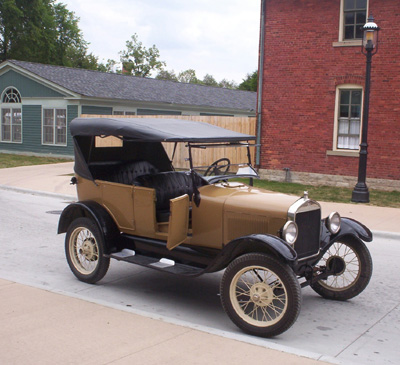
Ford Model T c. 1925, with minimal weather protection
-

Bentley 4½ Litre 1929 with luxury snap-on and thumbscrew sidescreens
-

Ford Phaeton 1934 open 4-door touring car
-
-

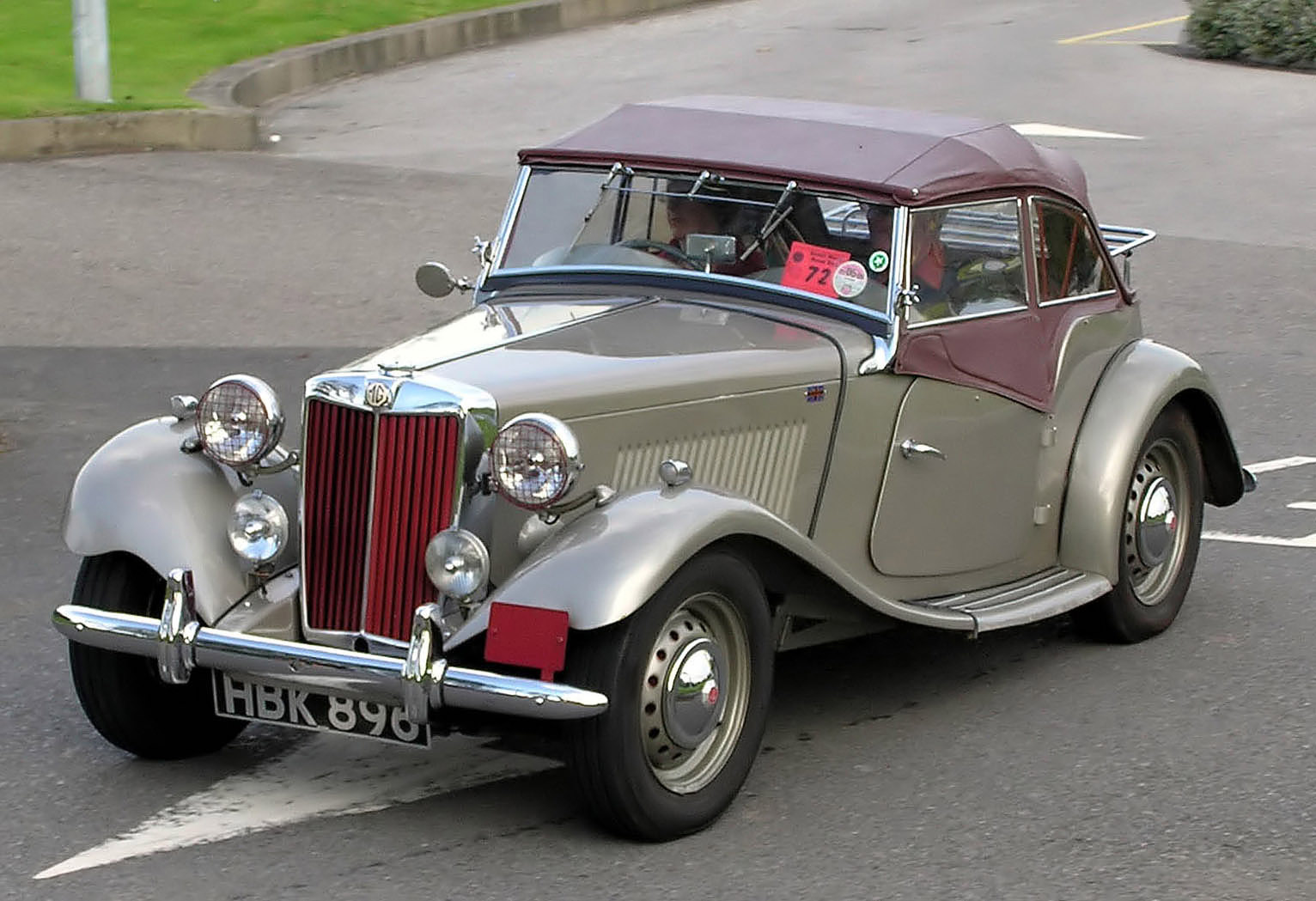
Lancia D23 Spyder 1953
-
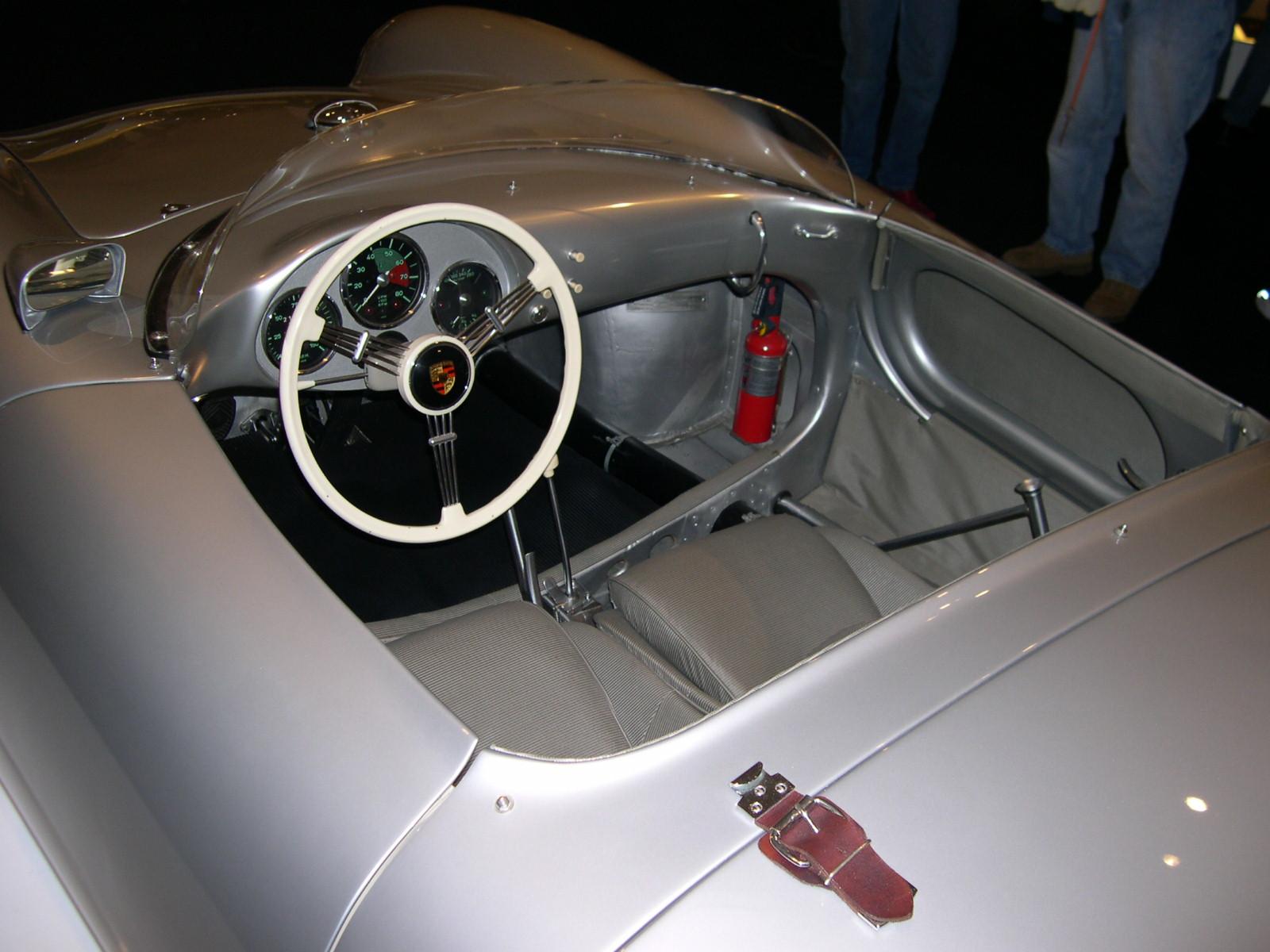
1955 Porsche 550 Spyder
-
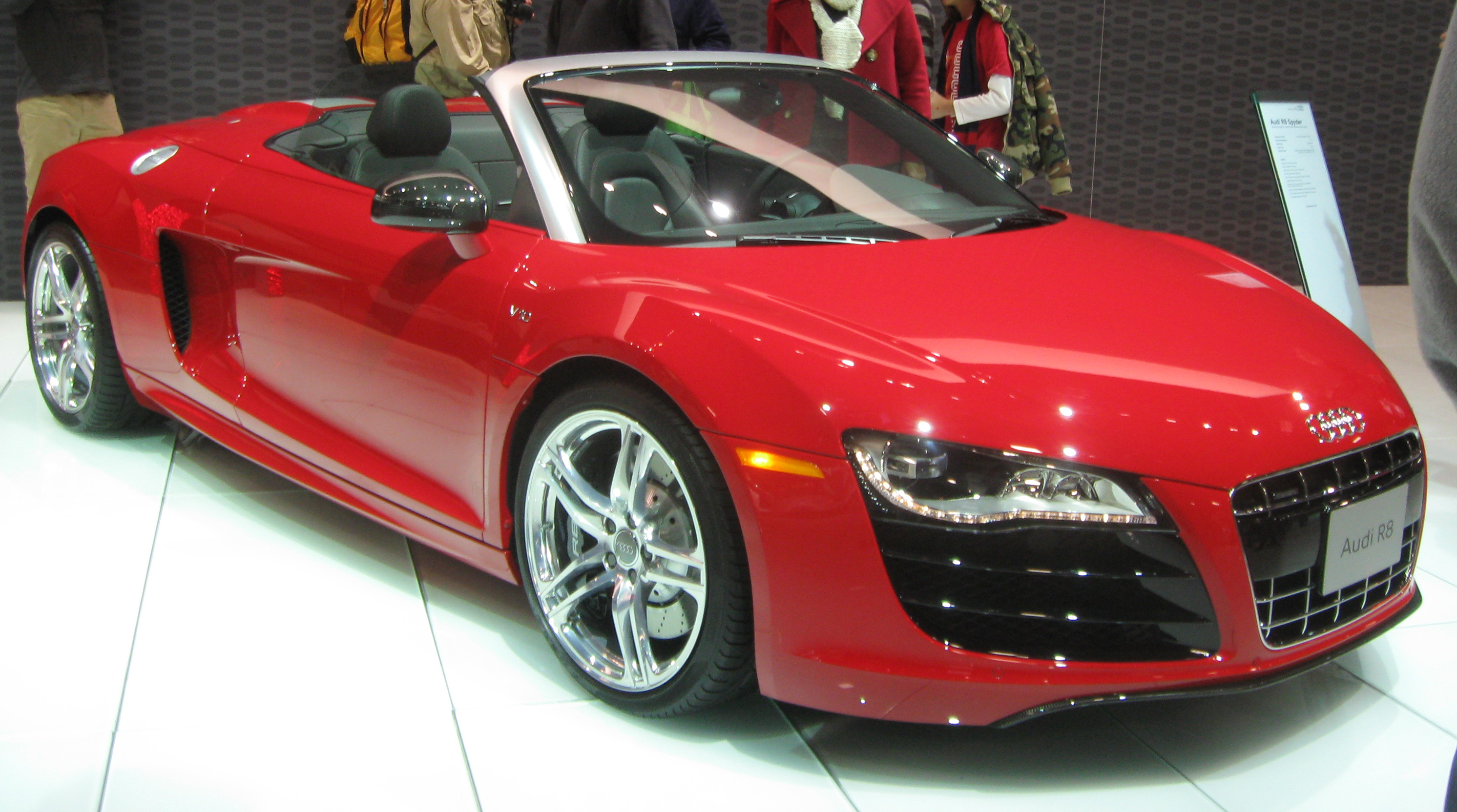
Audi R8 Spyder
windows carefully hidden


Conversíveis
-

Semi-convertible Nash Rambler Convertible "Landau" Coupe c. 1950
-

Jaguar XK c. 2008, with heatable glass rear window and fully automatic cloth top with integral top-concealing rigid tonneau
-

Mercedes SL c. 1963, perhaps the most popular detachable hardtop
-

Lincoln Continental c. 1966, 4-door with integral automatically operating, self-storing tonneau
-

Jaguar E-type c. 1970, with vinyl foldable tonneau installed and snap-secured
-

Cadillac Eldorado 1972, with detachable, two-part, fully rigid "parade boot" tonneau cover
-

Citroen 2CV c. 1975, with roll-back roof and rigid doors
-

Rolls Royce Corniche c. 1986, a high-end prestige marque with a manually installed tonneau cover
-
Yugo Cabrio c.1989, with wide rear window (with rear window heater), resistant canvas convertible top, an acoustic insulation layer, automatically raisable in 17 seconds.[17]
-
![Cadillac Allanté c. 1993, with detachable, rigid plastic tonneau cover. Built in Italy by Pininfarina, completed bodies were flown to the U.S. 56 at a time in specially equipped Boeing 747 with final assembly at Hamtramck, Michigan.[18]](https://upload.wikimedia.org/wikipedia/commons/a/a5/Allante.jpg)
Cadillac Allanté c. 1993, with detachable, rigid plastic tonneau cover. Built in Italy by Pininfarina, completed bodies were flown to the U.S. 56 at a time in specially equipped Boeing 747 with final assembly at Hamtramck, Michigan.[18]
-

Volkswagen New Beetle c. 2003, with raised textile (cloth) convertible top featuring interior headliner, an acoustic insulation layer, and heatable glass rear window
-
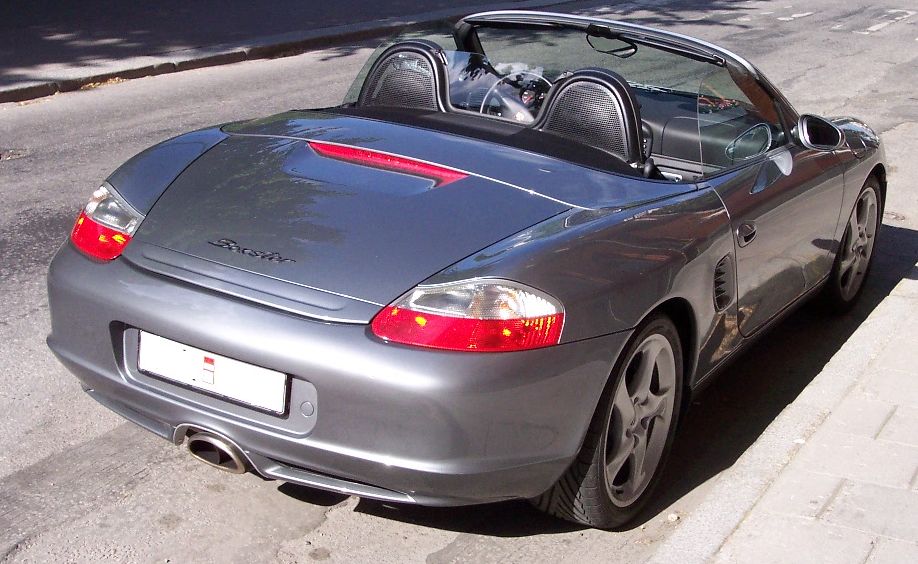
1−1 }} kg) detachable aluminum hardtop (not shown)
-
![Citroën C3 Pluriel c. 2007, a multi-configurable convertible with roll-back textile roof and removable rigid sidebars[5]](https://upload.wikimedia.org/wikipedia/commons/b/bf/Citroen_C3_Pluriel_rear_20071104.jpg)
Citroën C3 Pluriel c. 2007, a multi-configurable convertible with roll-back textile roof and removable rigid sidebars[5]
-
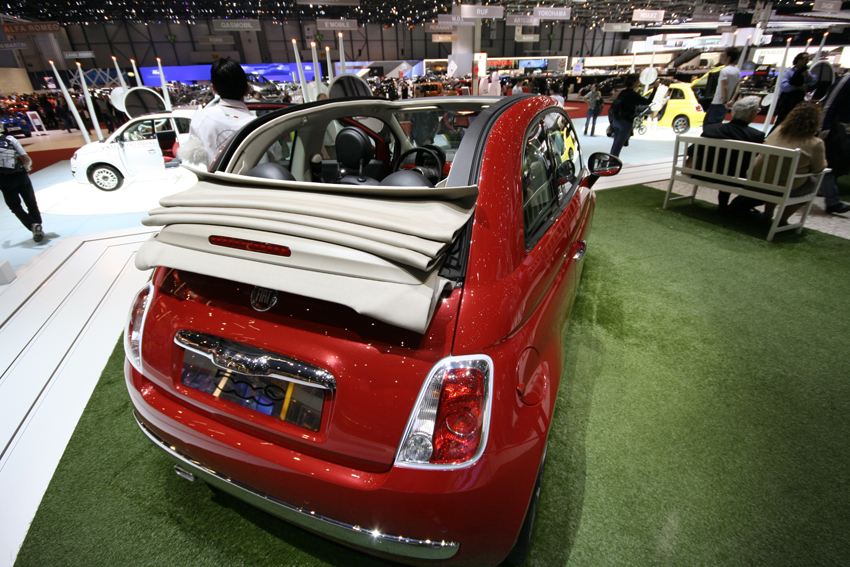
A Fiat 500 (2007) semi-convertible
-
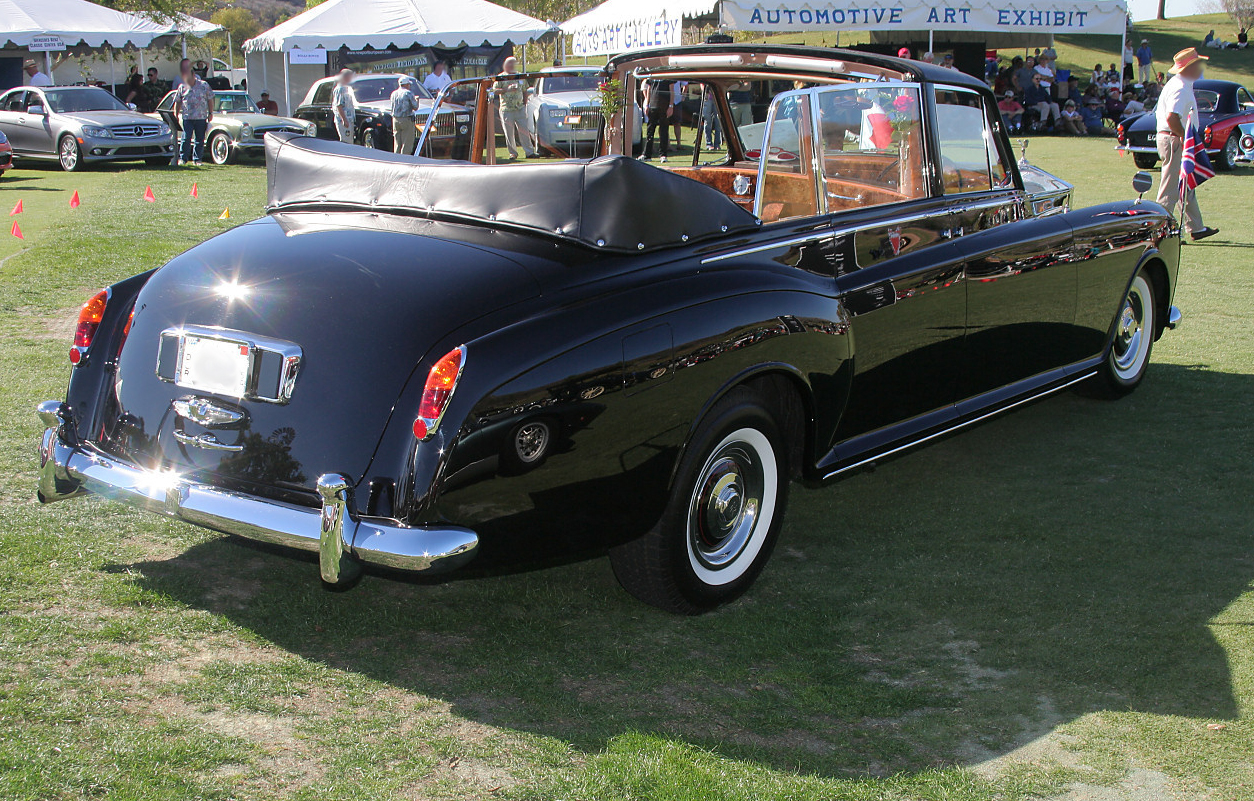
1966 Rolls-Royce Phantom V landaulet
-

Mercedes-Benz 300d landaulet in operation


![Cadillac Allanté c. 1993, with detachable, rigid plastic tonneau cover. Built in Italy by Pininfarina, completed bodies were flown to the U.S. 56 at a time in specially equipped Boeing 747 with final assembly at Hamtramck, Michigan.[18]](/index.php/Ficheiro:Allante.jpg)


![Citroën C3 Pluriel c. 2007, a multi-configurable convertible with roll-back textile roof and removable rigid sidebars[5]](/index.php/Ficheiro:Citroen_C3_Pluriel_rear_20071104.jpg)


Hardtop retrátil
-
0}} kg) polycarbonate hardtop and identical cargo capacity to the soft top version[20]
-
Cadillac XLR c. 2007, with fully retracted aluminum (i.e., lightweight) hardtop concealed by self-storing tonneau cover, the hardtop manufactured by a supplier joint venture of Mercedes-Benz and Porsche[21]
-
Daihatsu Copen c. 2001 with retracted hardtop, qualifying for the ultra-compact Japanese Kei class
-
Ford Focus CC c. 2006 with its roof retracted, its final assembly performed by Pininfarina
-
Chevrolet SSR c. 2004, a retractable hardtop convertible pickup truck, its top engineered by ASC
-
Volkswagen Eos c. 2007, the five-segment top features an independently sliding sunroof, made by OASys
Ver também
Não-automotive
- Drop Top Amber, a brand of beer
- "Rag Top Down", a 2012 rock song
- "Red Rag Top", a 2002 country song
Referências
Notas
- ↑ {{#invoke:Citação/CS1|citation |CitationClass=news }}To neutralize the loss of torsional rigidity inherent in any convertible, VW engineers cleverly took the basket-handle roll bar of the VW Cabrio, inverted it and placed it under the rear seat pedestal. A beefed-up windshield frame of hot-stamped ultra-high-strength steel is connected directly to the floorpan’s reinforced frame rails. Steel tubing provides more stiffness behind the doors for an extra layer of safety. Partly as a consequence, rear seat passengers have about 10 inches less shoulder room than in the smaller Rabbit.
- ↑ {{#invoke:Citar web|web}}
- ↑ Chrysler Group.prnewswire.com (30 March 2007). 2008 Chrysler Sebring Convertible's Solid Structure and Systems Deliver Smooth Driving, Tight Handling and a Quiet Ride. Press release. Página visitada em 6 March 2011.
- ↑ {{#invoke:Citar web|web}}[ligação inativa]
- ↑ 5,0 5,1 {{#invoke:Citar web|web}}[ligação inativa]
- ↑ 6,0 6,1 6,2 6,3 6,4 {{#invoke:Citar web|web}}
- ↑ {{#invoke:Citar web|web}}
- ↑ Cars of the Sizzling '60s, by the auto editors of Consumer Guide (Publications International, Ltd., Lincolnwood, IL, 1997), pages 68 to 69, and 307.
- ↑ 9,0 9,1 9,2 {{#invoke:Citar web|web}}[ligação inativa]
- ↑ {{#invoke:Citar web|web}}
- ↑ (2 June 1962) "All new (AMC advertisement)". Life 50 (22).
- ↑ {{#invoke:Citar web|web}}
- ↑ (February 1935) "Disappearing Top On Auto Worked By Push Button". Popular Mechanics 63 (2).
- ↑ (January 1936) "Latest Foreign Auto Has Disappearing Top". Popular Mechanics 65 (1).
- ↑ {{#invoke:Citação/CS1|citation |CitationClass=news }}
- ↑ {{#invoke:Citação/CS1|citation |CitationClass=news }}
- ↑ http://zastavanacionale.com/Default.aspx?lng=en-us&mode=models&id=cabrio
- ↑ {{#invoke:Citação/CS1|citation |CitationClass=news }}
- ↑ {{#invoke:Citar web|web}}
- ↑ {{#invoke:Citar web|web}}
- ↑ Keebler, Jack. (August 2002). "2004 Cadillac XLR". Motor Trend.
Bibliografia
- Predefinição:Adler-Convertibles
- {{#invoke:Citação/CS1|citation
|CitationClass=book }}
- Predefinição:Benson-Convertibles
- {{#invoke:Citação/CS1|citation
|CitationClass=book }}

![Yugo Cabrio c.1989, with wide rear window (with rear window heater), resistant canvas convertible top, an acoustic insulation layer, automatically raisable in 17 seconds.[17]](/index.php?title=Especial:Carregar_imagem&wpDestFile=Yugo_GV_Cabrio.jpg)
![0}} kg) polycarbonate hardtop and identical cargo capacity to the soft top version[20]](/index.php?title=Especial:Carregar_imagem&wpDestFile=Mazda_MX-5_hardtop.jpg)
![Cadillac XLR c. 2007, with fully retracted aluminum (i.e., lightweight) hardtop concealed by self-storing tonneau cover, the hardtop manufactured by a supplier joint venture of Mercedes-Benz and Porsche[21]](/index.php?title=Especial:Carregar_imagem&wpDestFile=Cadillac_XLR_2006.jpg)


